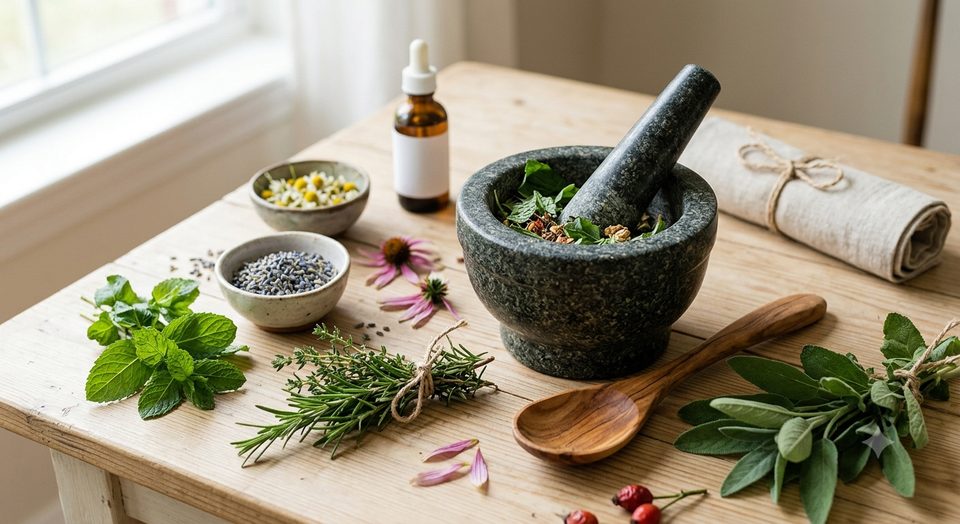
Unani medicine, explained: majoon, khamira, roghan, qurs and more
A plain-language guide to the classical Unani dosage forms you will find across the Healtharo range — and how to read a Healtharo pack.
Unani (Yunani, “Greek”) medicine is a traditional system of healthcare that grew from the teachings of Hippocrates and Galen, was systematised by physicians such as Ibn Sina (Avicenna), and has been practised in India for centuries. It is one of the systems recognised by India’s Ministry of AYUSH. Unani understands health as a balance of the body’s temperament (mizaj) and four humours — dam (blood), balgham (phlegm), safra (yellow bile) and sauda (black bile) — and prepares its medicines from herbs, minerals and other natural ingredients.
What makes the Unani formulary distinctive is its dosage forms. A single herb may be prepared as a majoon, a khamira, a roghan or an arq depending on how it is meant to be taken. This guide explains the forms you will find across the Healtharo range, all of which are prepared by Dardmand Biotech Pvt. Ltd. in Sambhal, Uttar Pradesh.
The Unani formulary
Twelve forms, one tradition
Each form has its own way of being prepared and taken. Product names on Healtharo packs usually begin with the form — Majoon, Khamira, Roghan, Qurs, Habb — followed by the principal ingredient.
01
Majoon (Majun)
A semi-solid electuary: powdered herbs blended into a cooked sugar or honey base (qiwam) and taken in gram doses with water or milk. Majoon is the classic form for tonics and long-course preparations.
A cordial confection made by cooking a sugar base to a thick, glossy consistency and folding in herbal extracts and, in some recipes, silk cocoon, pearl or borage. Khamira Abresham, Khamira Gaozaban and Khamira Marwareed are traditionally regarded as tonics.
A majoon-type preparation whose base is the three myrobalans — halela, balela and amla (the Ayurvedic triphala) — with additional herbs. Itrifal Ustukhuddus adds lavender; Itrifal Mulaiyin is the gentle, softening variant.
A coarse-textured digestive confection in which herbs and seeds are coarsely powdered rather than finely ground. Jawarish Jalinoos is named after Galen; Jawarish Kamooni is built on cumin and Jawarish Ood Shireen on agarwood.
A medicated oil, usually for external application or massage, prepared by cooking herbs in a carrier oil or by cold-pressing seeds and nuts. The range runs from Roghan Badam Shirin (sweet almond) and Roghan Zaitoon (olive) to Roghan Gul (rose), Roghan Kahu (lettuce seed) and Roghan Malkangni.
Qurs is the Unani tablet. Kushta preparations are classical calx forms of minerals and shells — Kushta Faulad (iron), Kushta Sadaf (oyster shell), Kushta Baiza Murgh (egg shell), Kushta Gaudanti — prepared by the traditional calcination process and taken only in the small doses and under the direction a practitioner prescribes.
Small rolled pills. Many carry the name of their principal ingredient: Habb-e-Asgand (ashwagandha), Habb-e-Hilteet (asafoetida), Habb-e-Rasaut (berberis extract), Habb-e-Papita (papaya). Habb-e-Jawahar is the classical jewel-pill prepared with pearl and precious stones.
A nourishing confection cooked with ghee, flour or seed paste and sugar. Halwa Salab is prepared with salep orchid, Halwa Gheekwar with aloe, and Supari Pak is the classical post-natal preparation built on areca.
A distillate or hydrosol: herbs are steam-distilled so the aromatic water can be taken in measured doses or used on the skin. Arq Shakri is the Healtharo distillate for blood-sugar support; Gul-e-Ruk is our rose water.
Sweetened liquid preparations. Traditional sharbat is sugar-based; most Healtharo syrups are prepared as sugar-free syrups so they can be taken daily — for example Sharbat Sadar Qawi for the cough-and-cold season, and the family Health Tonic.
Sadar QawiSurfalinHealtharo Health TonicHDL SyrupCholestWell
Sirka is vinegar — Sirka Jamun and Sirka Seb (apple cider) are the Unani classics — and murabba is a fruit preserve, such as Amla murabba and apple murabba, taken as a nourishing food.
Cold-processed juices of single herbs and fruits widely used in Unani and Ayurvedic practice: Amla, Aloe vera, Giloy-Tulsi, Karela-Jamun, Moringa, Noni and Triphala.
Amla JuiceAloe Vera JuiceGiloy Tulsi JuiceKarela Jamun JuiceMoringa JuiceNoni Juice
Every Healtharo pack lists its ingredients by traditional name and botanical name, with the quantity per dose — for example “Asgandh (Withania somnifera) Rt. Dct. 255 mg”, where Rt. means root and Dct. means decoction. Product pages on this site reproduce these tables.
Directions
Doses are given per form: millilitres for syrups and arq, capsules or tablets per day, grams for majoon, khamira and powders. “Or as directed by the physician” means a qualified Unani or Ayurvedic practitioner can adjust the dose for you.
Sugar-free
Where a syrup is prepared without sugar, the pack says “sugar free” and the composition names the sugar-free syrup base.
For external use only
Roghan oils, hair oils and pain-relief oils are applied to the skin or scalp and are never taken by mouth.
Prepared in Sambhal since 2012
Every form in this guide is prepared by Dardmand Biotech Pvt. Ltd. at Khaggu Sarai, Sambhal, Uttar Pradesh, under the company’s GMP and ISO 9001:2015 quality systems. Healtharo products are herbal and Unani formulations and are not a substitute for professional medical advice.
Unani (Yunani) medicine is a traditional system of healthcare with Greco-Arabic roots, developed by physicians such as Ibn Sina and practised in India for centuries. It is one of the systems recognised under the Ministry of AYUSH. Unani formulations are prepared from herbs, minerals and natural ingredients in classical forms such as majoon, khamira, jawarish, roghan, qurs and habb.
Which forms of medicine does Healtharo make?
Syrups and sharbat (many of them sugar-free), capsules, tablets, powders, majun, hair oils and pain-relief oils, arq (distillates) and rose water. Our classical range adds roghan oils, qurs and kushta tablets, huboob pills, itrifal, jawarish, khamira, majoon, halwa, herbal juices, sirka (vinegars) and murabba.
Are Healtharo syrups sugar-free?
Many Healtharo syrups — including HDL, CholestWell, Sadar Qawi, Surfalin, Calistone, Al-Shifateen and the Healtharo Health Tonic — are prepared as sugar-free syrups. The pack and the product page state this for each product.
Does Healtharo make Ayurvedic products as well as Unani?
Our formulations follow the Unani tradition, and the range also includes herbal products widely used in Ayurvedic practice, such as Amla, Giloy-Tulsi, Triphala, Karela-Jamun, Noni and Moringa juices, Shilajit, Kalonji oil and aloe vera preparations.
Looking for a specific Unani preparation?
Tell us the name — majoon, khamira, roghan or habb — and we will confirm availability and pack sizes.